Accra, Ghana — 17 July 2026
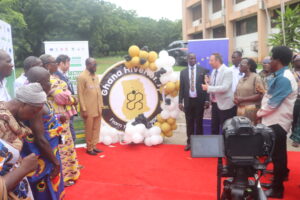
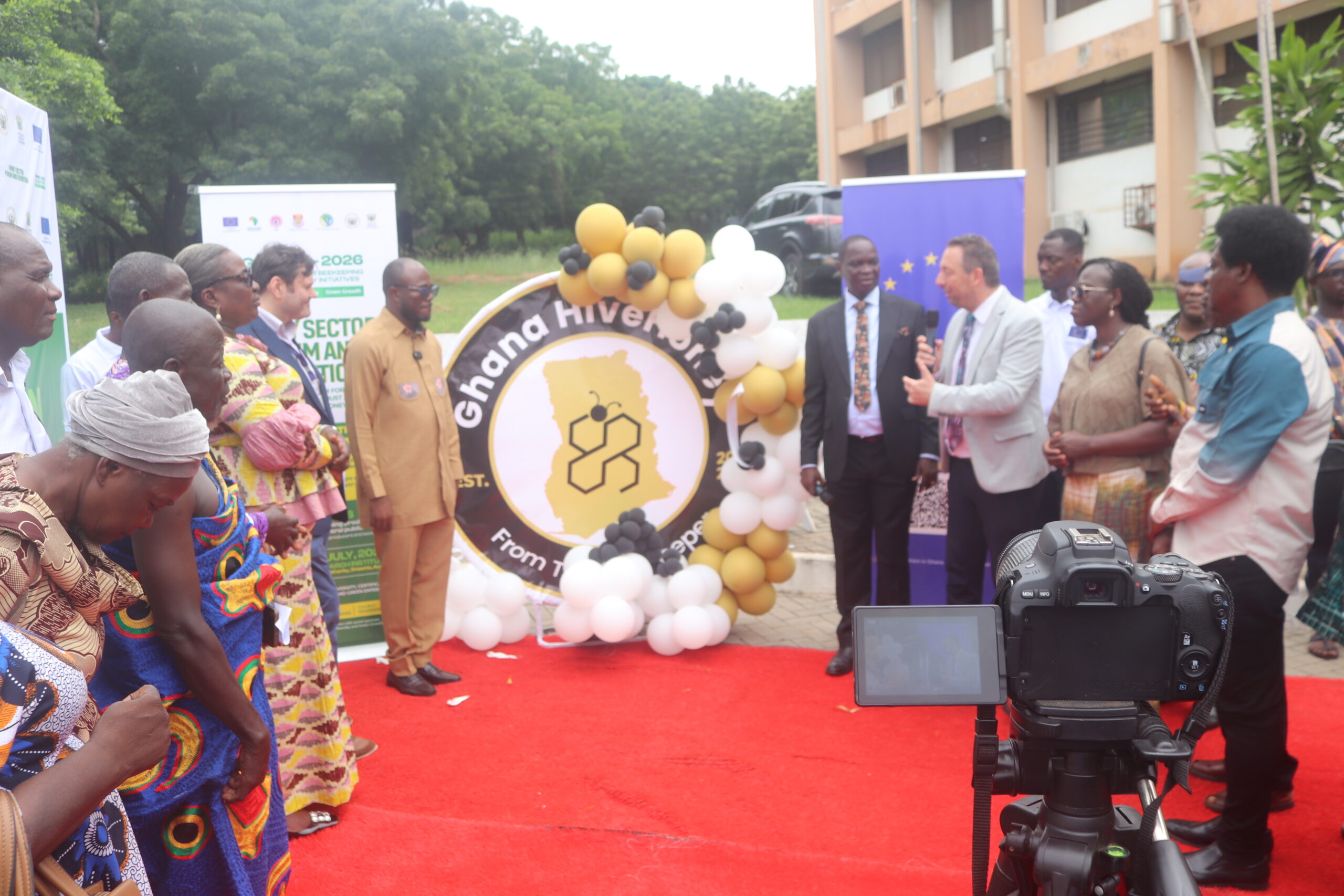
The Ghana Forum for Beekeeping and Biodiversity Initiative (GhaFBBI 2026) Honey Sector Forum and Exhibition concluded on 15 July 2026 at the CSIR-Food Research Institute, Shiashie, Accra, with the launch of the Ghana HiveHoney Collective Mark; a new certification initiative designed to rebuild consumer confidence in local honey and support the country’s return to the European Union export market.
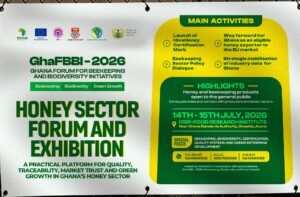
Held under the theme “Beekeeping, Biodiversity and Green Growth,” the two-day forum was hosted by the West African Centre for Agribusiness and Apiculture Development (WACAAD), with support from the European Union Delegation to Ghana, and brought together policymakers, regulators, researchers, beekeepers, processors, exporters and development partners to confront the structural challenges holding back Ghana’s honey industry.
A Sector at a Turning Point
Opening the forum, Dr. Courage Komla Besah-Adanu, Lead Consultant at WACAAD, described the gathering as a pivotal moment for the sector, calling for a shift away from celebrating honey as a product towards building the systems including quality assurance, traceability and institutional coordination that a credible, export-ready industry requires.
That message was echoed throughout the two days. Delivering the keynote address, Rev. Prof. Peter Kofi Kwapong, Board Chair of WACAAD, described bees as “silent heroes” and “economic engineers,” pollinating crops that underpin food security across Ghana, from cocoa and shea to tomatoes and citrus. Warning that bushfires, deforestation, sand winning, illegal mining (galamsey) and pesticide misuse are driving pollinator decline, he urged government, academia, industry and development partners to unite around a shared national agenda, summarised in his closing call to action: “Grow Bees → Grow Biodiversity → Grow Green → Grow Ghana.”
HiveHoney Collective Mark: A Shared Quality Promise
The centrepiece of the forum was the launch of the Ghana HiveHoney Collective Mark, presented by Dr. Besah-Adanu as a mechanism to give Ghanaian honey producers a shared identity built on agreed production standards. Rather than replacing existing regulation, the mark is designed to work alongside the Food and Drugs Authority (FDA) and the Ghana Standards Authority (GSA), introducing quality checks at producer level ahead of formal certification.
“A collective mark is not merely a logo,” Dr. Besah-Adanu told participants, “but a symbol of a shared commitment by stakeholders of a value chain to adhere to agreed standards, production practices and quality requirements.” A representative of the GSA confirmed that the mark is a voluntary private certification initiative that complements rather than substitutes for statutory certification, and used the session to signal that Ghana’s national honey standard, in place since 2015, is now due for review.
Rebuilding the Path to the European Union
Ghana’s route back to the EU honey export market ran through nearly every session of the forum. Representing the European Union Delegation to Ghana, Hon. Nils Weller reaffirmed the EU’s commitment to supporting Ghana’s honey value chain in partnership with WACAAD, the FDA, GSA and Veterinary Services Directorate (VSD), stressing that re-entry will depend on sustained institutional collaboration and stronger regulatory compliance.
Dr. (Vet.) Edem Apewokin of the VSD set out the technical stakes, explaining that disease management and control of Maximum Residue Levels (MRLs) are central to export eligibility, and confirming that no known zoonotic bee diseases are currently present in Ghana. Private-sector voices reinforced the urgency. Mr. Kwame Laud of SG Smart Group described how a single contaminated drum of honey has previously led to the rejection of entire multi-regional export shipments, underlining the need for rigorous, data-driven record-keeping across the value chain.
Beekeeping as a Vehicle for Green Growth and Inclusion
Beyond market access, the forum placed sustained emphasis on beekeeping’s environmental and social value. Rev. Prof. Kwapong’s technical session on biodiversity and pollination detailed Ghana’s rich, still under-documented bee diversity including 13 identified species of stingless bee by the International Stingless Bee Centre at the University of Cape Coast and warned that habitat loss and chemical-intensive farming threaten the pollinators that Ghana’s agriculture depends on.
A dedicated session led by Dr. Fortune Selorm Agbele explored the sector’s potential to drive inclusive growth, highlighting beekeeping’s low start-up costs and year-round income streams as a route to economic empowerment for women and young people, while beekeeper and trainer Mrs. Rejoice Azameti from Bees for Development, drawing on her experience training nearly 100 women beekeepers affirmed that women can succeed across every stage of the value chain, from hive construction to processing.
A National Roadmap for the Sector
Closing the forum’s technical proceedings, Dr. Kojo Ahiakpa, Executive Director of WACAAD set out a seven-point roadmap to sustain the momentum generated by GhaFBBI 2026, calling for:
- A single government agency to provide long-term institutional and policy leadership for the sector.
- WACAAD-led promotion and training to drive adoption of the Ghana HiveHoney Collective Mark.
- A review of Ghana’s 2015 honey standard by the GSA and FDA with WACAAD and stakeholders.
- A centralised, digital database of laboratory-tested industry production data.
- A “single testing” model to remove duplicated quality checks and ease international trade.
- Stronger producer cooperatives and shared processing infrastructure, in partnership with the Forestry Commission.
- Coordinated mobilisation of stakeholders and resources to complete a national apiculture policy.
Speaking on behalf of the Food and Agriculture Organisation (FAO), Mr. Clifford Adagenera congratulated WACAAD on the forum and pledged continued technical support through FAO’s Forest and Farm Facility to advance sustainable beekeeping and climate-resilient livelihoods in Ghana.
Closing the Forum
Bringing the two-day forum to a close, Rev. Prof. Kwapong thanked participants for their sustained engagement, noting it was the first conference he had attended where attendees remained so consistently committed through to the final session. He reassured stakeholders that the ideas and commitments shared over the two days are already being translated into a concrete plan of action for the sector, and urged all partners to carry that spirit of collaboration back to their own institutions and regions.
About GhaFBBI 2026
The Ghana Forum for Beekeeping and Biodiversity Initiatives (GhaFBBI 2026) Honey Sector Forum and Exhibition was hosted by the West African Centre for Agribusiness and Apiculture Development (WACAAD) on 14–15 July 2026 at the CSIR-Food Research Institute, Shiashie, Accra, with support from the European Union Delegation to Ghana. The forum brought together government institutions, regulatory agencies, academia, development partners, producers and exporters to advance quality assurance, certification, biodiversity conservation and market access across Ghana’s honey sector.
This action is funded by the European Union. Its contents are the sole responsibility of WACAAD and its partners and do not necessarily reflect the views of the European Union.
Media Contact
West African Centre for Agribusiness and Apiculture Development (WACAAD) — Williams Clinton Appoh, Email: info@wacaad.org. Phone Number: +233 0208361932]